
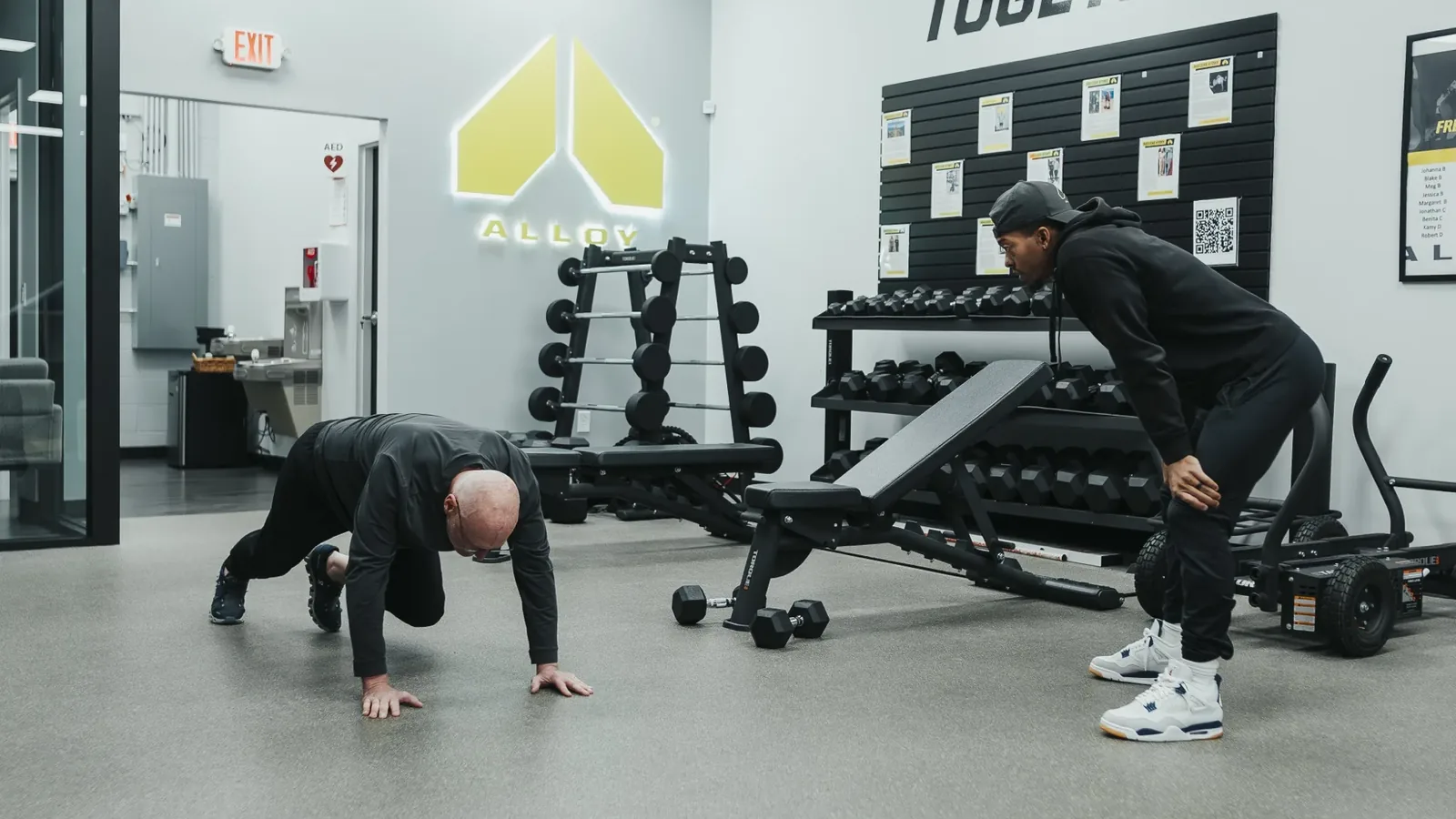
The honest answer is that the best training frequency is the highest one you can sustain for a year without resenting it. But that's not very useful on its own, so let's look at what the number actually does.
What the research generally supports
Across the strength training literature, a fairly consistent pattern shows up: training a muscle group about twice a week produces better results than once, and the returns beyond that get smaller and smaller. Total weekly work matters more than how you slice it up.
In practical terms, for an adult over 40 who wants to be stronger, hold onto muscle, and keep moving well:
- Two full-body sessions a week is a genuinely effective program. Not a compromise — effective.
- Three sessions a week is modestly better for most goals and is where a lot of people settle long-term.
- Four or more starts to serve specific goals — sport, competition, aggressive body composition targets — and demands that your sleep, nutrition, and stress are actually in order.
The gap between zero and two is enormous. The gap between two and three is small. The gap between three and four is smaller still, and for a lot of people it's negative, because the fourth session is the one that gets skipped, resented, and eventually turns into skipping all of them.
Why recovery changes the math after 40
Muscles adapt to training during recovery, not during the session. And recovery is where age genuinely shows up — not in your capacity to get strong, which stays remarkably intact, but in how long it takes to bounce back.
Several things shift:
- Connective tissue is slower than muscle. Tendons and ligaments adapt more slowly than the muscles pulling on them, which is why the classic over-40 injury is someone whose strength outran their tendons in six enthusiastic weeks.
- Sleep matters more, and is often worse. The stretch of life where people are 45 with a career and kids is not the stretch with the best sleep. Under-slept recovery is slower recovery.
- Life stress is training stress. Your body doesn't keep separate ledgers for a hard week at work and a hard week in the gym.
None of this means training less. It means spacing sessions so the work actually turns into adaptation — usually at least a day between sessions hitting the same muscles.
Picking your number honestly
Look at your actual calendar, not your aspirational one. Then pick the frequency you'd still hit during a bad month — a work deadline, a sick kid, a February cold snap. That's your real program. Anything above it is a bonus.
Two well-executed sessions every week for a year will beat four sessions a week for five weeks followed by nothing, every single time. This isn't a motivational cliché; it's just how adaptation works. Consistency compounds and enthusiasm doesn't.
A few practical notes:
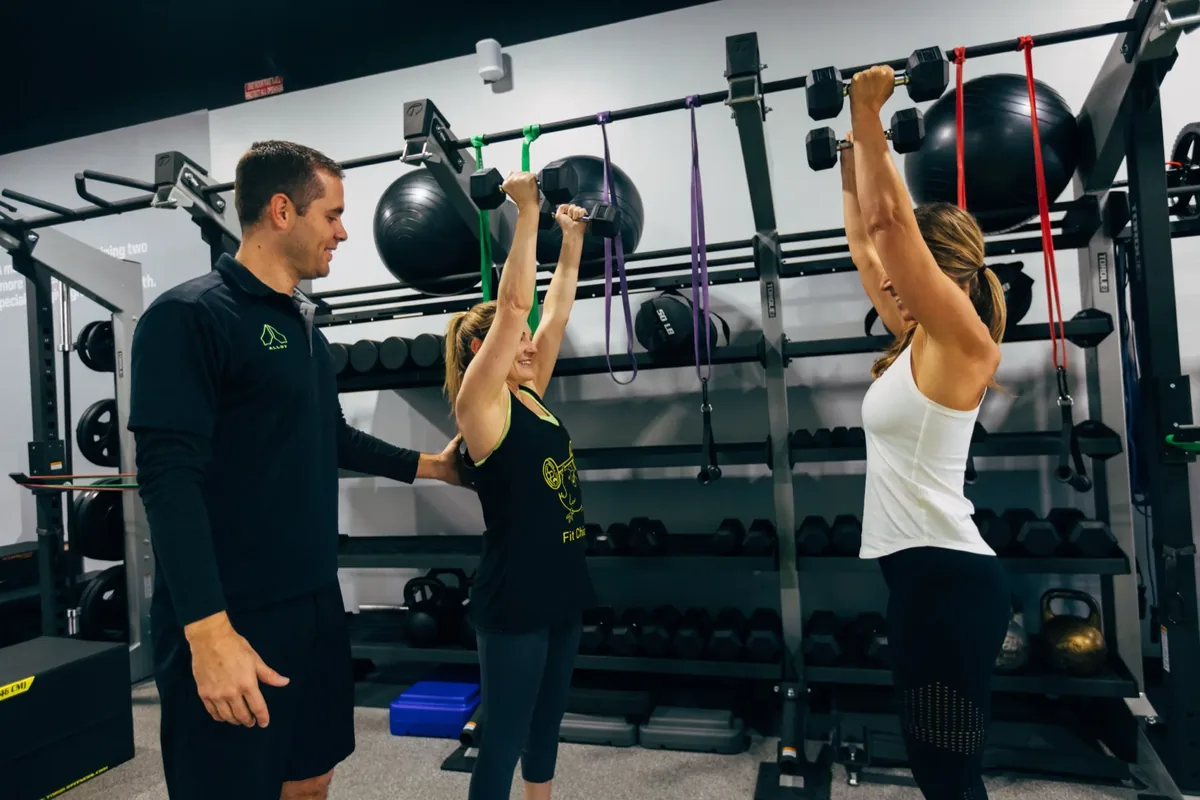
- Book it like a meeting. Sessions with a set time and a coach expecting you survive busy weeks. "I'll go after work sometime" does not.
- Full-body beats splits at low frequency. If you train twice a week, hitting everything both times beats a chest day and a leg day.
- A missed week is not a failed program. Return to the same weights, not to zero. Nothing meaningful is lost in seven days.
What this looks like in practice
Most of the members at our studio on Winnebago Street train two or three times a week, and the ones who've been at it longest are almost always the twice-a-week people who simply never stopped. Sessions are capped at six, everyone works through their own program, and the programming accounts for what you did last session rather than treating each one as an isolated workout.
If you want help picking a realistic number, the Starting Point Session includes an InBody body composition scan, a movement assessment, a sample workout, and a plan built around your actual schedule — not an ideal one.